Brahms and His World by Frisch Walter Karnes Kevin C
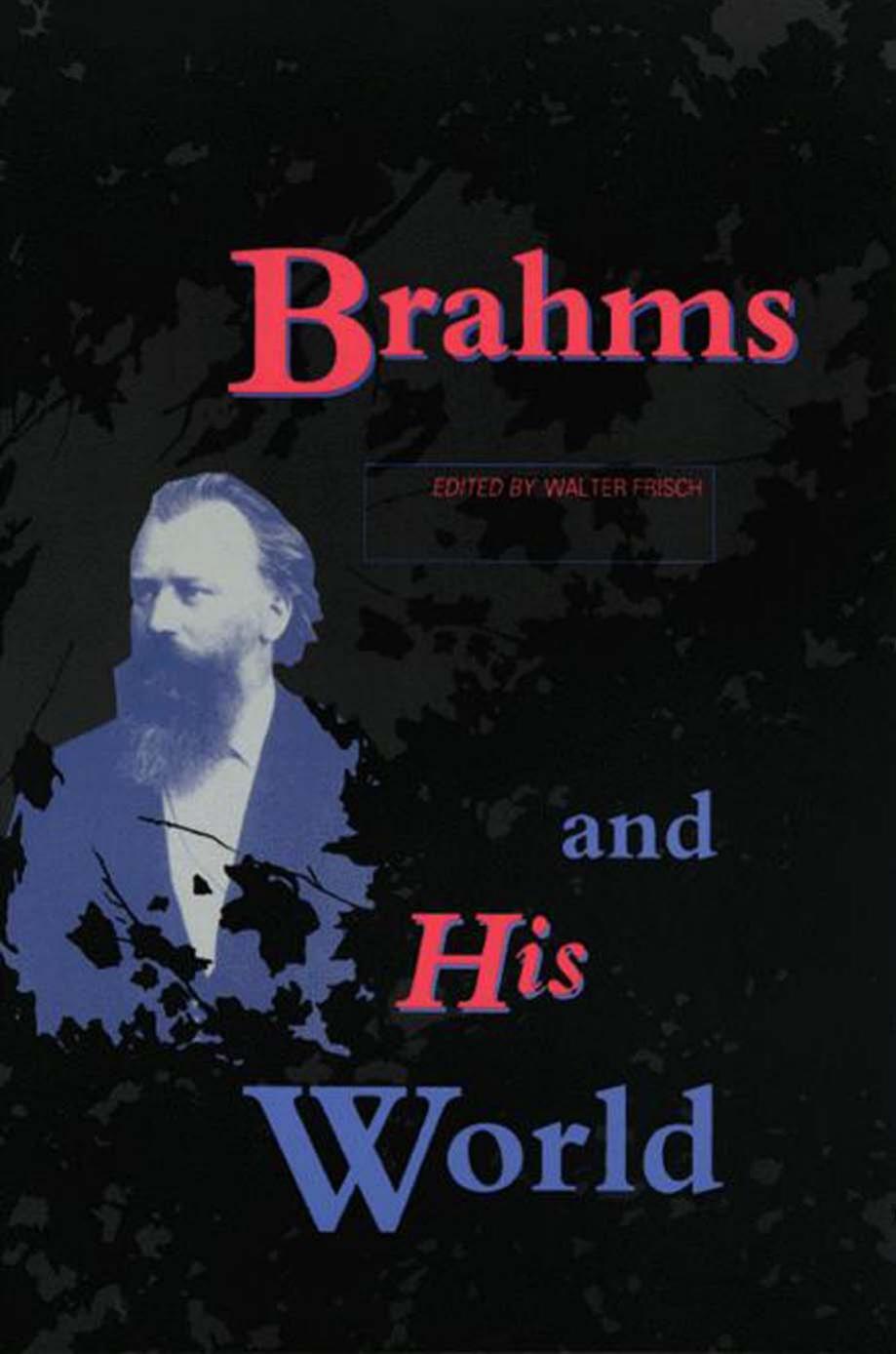
Author:Frisch, Walter, Karnes, Kevin C. [Frisch, Walter; Karnes, Kevin C.]
Language: eng
Format: epub, pdf
ISBN: 978-1-4008-3362-7
Publisher: Princeton University Press
Published: 2009-03-18T04:00:00+00:00
Triumphlied, op. 55, and Schicksalslied, op. 54 (1872)
Along with the German Requiem, Brahms’s Triumphlied for eight-part choir, orchestra, and organ belongs among those magnificent works that place Brahms among the ranks of the great masters. In both, we find realized those wonderful effects that Schumann predicted “when Brahms waves his magic wand over the united forces of chorus and orchestra.”21 Here Brahms found his true footing, and he constructed such a tower upon that foundation that no living composer could follow him. In the area of spiritual music in the grandest sense, nothing has appeared since Bach’s Passions, Handel’s oratorios, and Beethoven’s Festmesse that stands so close to those works in magnificence of conception, sublimity of expression, and power of polyphonic composition as Brahms’s Requiem and Triumphlied. Influences of all three masters—of Bach, Handel, and Beethoven—are at play in Brahms. But they have been so dissolved within his blood and have reemerged as part of such a unique and independent individuality that one cannot derive Brahms from any of these three alone. One can only say that in him something of this tripartite spirit is resurrected in modern form.
Originally, the Triumphlied bore the subtitle “Auf den Sieg der deutschen Waffen” (To the victory of German arms), and this glorious occasion is clearly commemorated, for all time, within the work itself. It was not Brahms’s desire to declare any overt bias, but one cannot suppress it in a work whose text was written over a thousand years before the Battle of Sedan.22 The words are taken from Chapter 19 of the Book of Revelation. The first of the three movements for double choir that together comprise the Trimphlied sets the words “Hallelujah, Heil und Preis, Ehre und Kraft sei Gott unserm Herrn!” (Hallelujah, salvation and praise, honor and strength belong to our Lord God!), the principal motive of which repeats exactly the notes that set “Heil dir im Siegerkranz” (Salvation is yours in the circle of victors), but with a completely different rhythmic and harmonic setting. The rejoicing trumpet fanfare in D establishes the Handelian character of the piece from the start, fusing a healthy strength of expression to the highest art of composition.
“Lobet unsern Gott, alle seine Knechte und die ihn fürchten, Kleine und Große; denn der allmächtige Gott hat das Reich eingenommen” (Praise our God and all who work for him and fear him, small and great; for the almighty God has entered into the kingdom): these are the words upon which the second movement is built. Toward its end, the movement gives way to a rolling melody introduced by soft triplets, setting “Laßt uns freuen und fröhlich sein” (Let us rejoice and be happy)—a melody whose mild, blissful expressiveness is raised to the level of true transfiguration by the wonderful concluding piano. The third and final movement, which, after the lyricism of both preceding choruses, passes by in a dramatic and epic manner (though measured and quick), is introduced in an extraordinarily effective way. It begins with the
Download
Brahms and His World by Frisch Walter Karnes Kevin C.pdf
This site does not store any files on its server. We only index and link to content provided by other sites. Please contact the content providers to delete copyright contents if any and email us, we'll remove relevant links or contents immediately.
The Goal (Off-Campus #4) by Elle Kennedy(13696)
Kathy Andrews Collection by Kathy Andrews(11858)
Diary of a Player by Brad Paisley(7602)
Assassin’s Fate by Robin Hobb(6235)
What Does This Button Do? by Bruce Dickinson(6214)
Big Little Lies by Liane Moriarty(5821)
Altered Sensations by David Pantalony(5113)
Pale Blue Dot by Carl Sagan(5021)
Sticky Fingers by Joe Hagan(4211)
The Death of the Heart by Elizabeth Bowen(3631)
The Heroin Diaries by Nikki Sixx(3555)
Confessions of a Video Vixen by Karrine Steffans(3317)
Beneath These Shadows by Meghan March(3315)
How Music Works by David Byrne(3286)
The Help by Kathryn Stockett(3156)
Computational Linguistics and Intelligent Text Processing: 20th International Conference, CICLing 2019 La Rochelle, France, April 7â13, 2019 Revised Selected Papers, Part I by Alexander Gelbukh(3126)
Jam by Jam (epub)(3102)
Harry Potter 4 - Harry Potter and The Goblet of Fire by J.K.Rowling(3086)
Strange Fascination: David Bowie: The Definitive Story by David Buckley(2877)
